Four principles of a strong joint.
To make joints that hold consistently, these points must be clearly understood:
- 1Joining surfaces should be softened and made semi-liquid.
- 2Enough adhesive should be applied to fill the gap between pipe and fitting.
- 3Pipe and fitting should be assembled while the surfaces are still wet and the adhesive is still liquid.
- 4Joint strength develops as the adhesive dries: in the tight part of the joint the surfaces fuse, in the loose part the adhesive bonds to both.
A heavy layer of cement stays wet much longer and penetrates the surface more deeply than a thin one. If the coatings on pipe and fitting are still wet when they are assembled, they flow together into a single layer of adhesive.
Seven steps to a sealed joint.
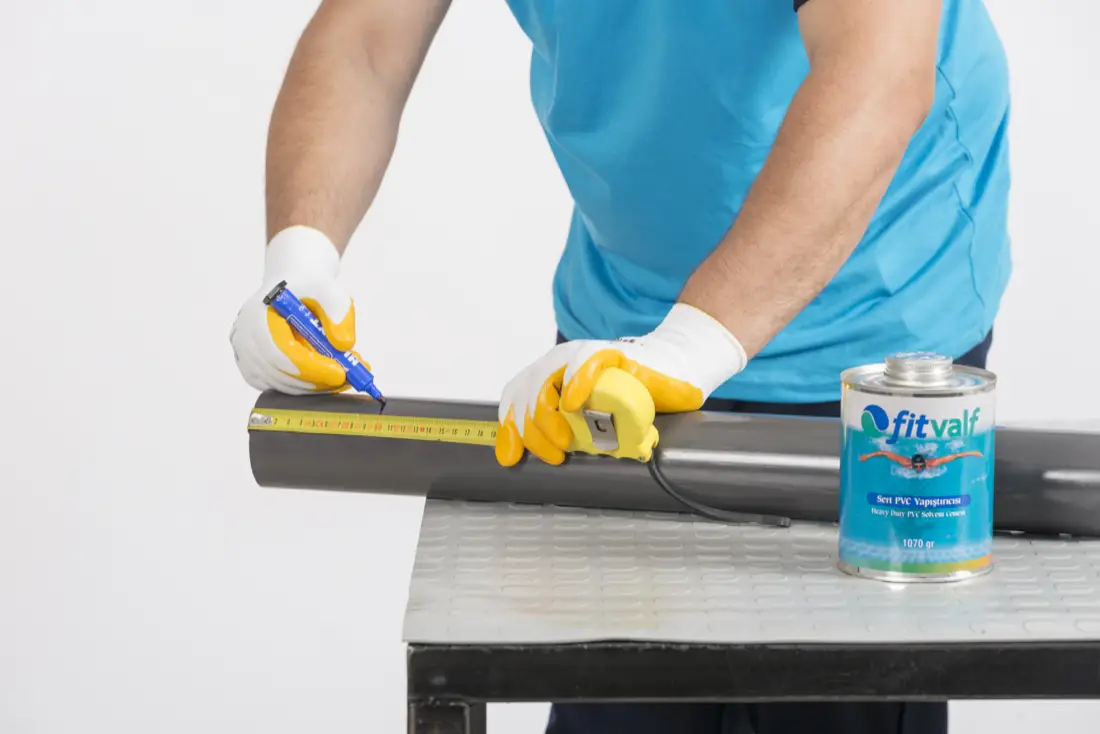
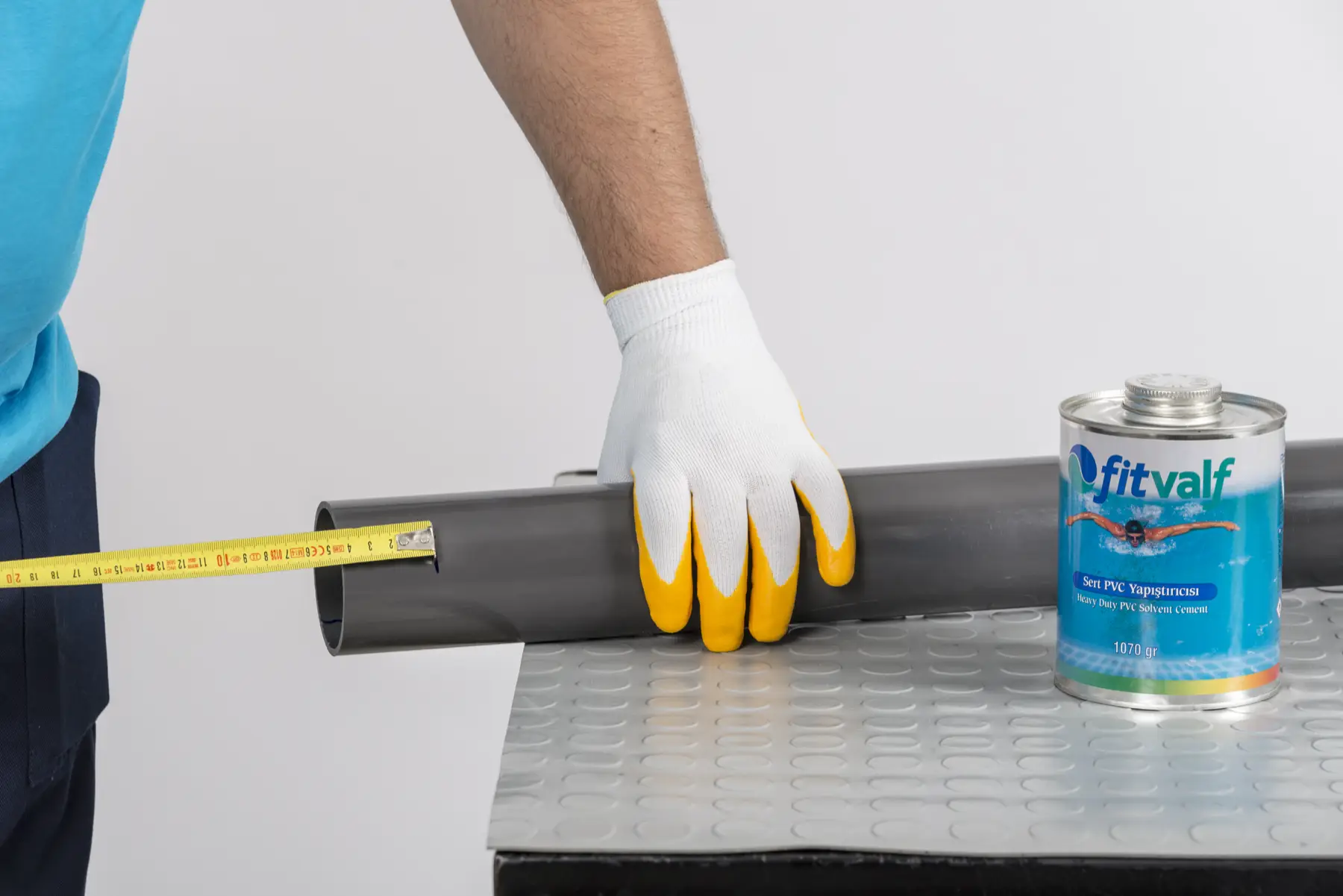
Measure and mark
Measure the pipe length you need and mark the cutting line.
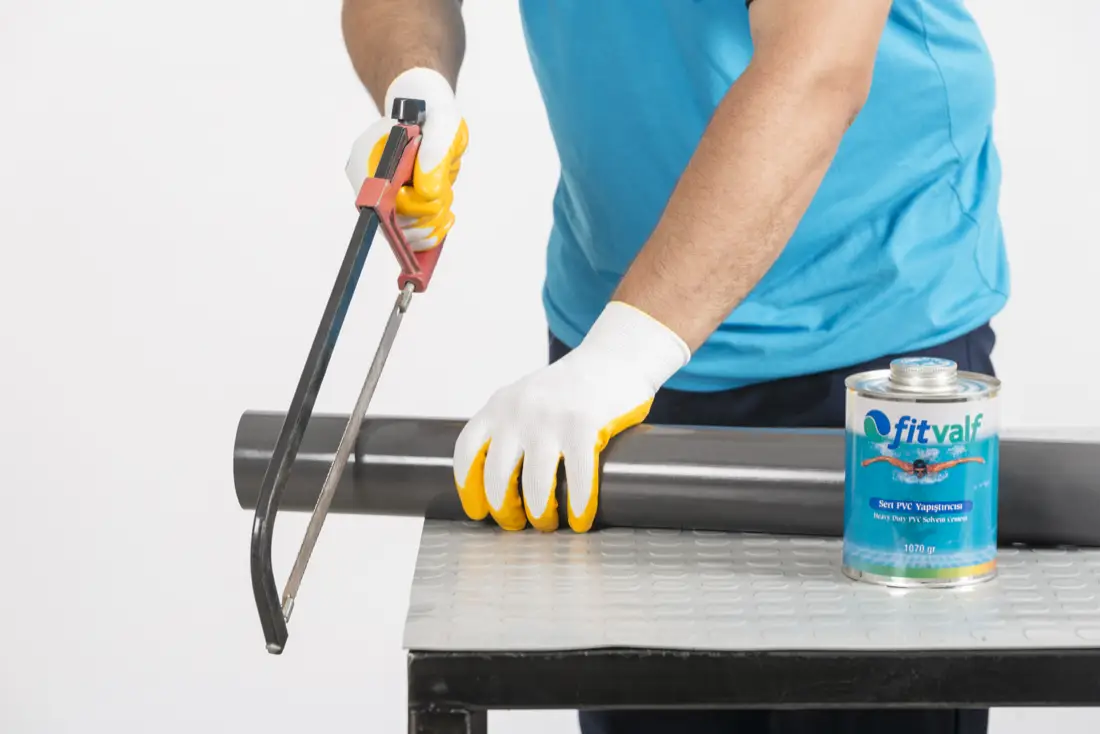
Cut square
Cut the pipe square to its axis.
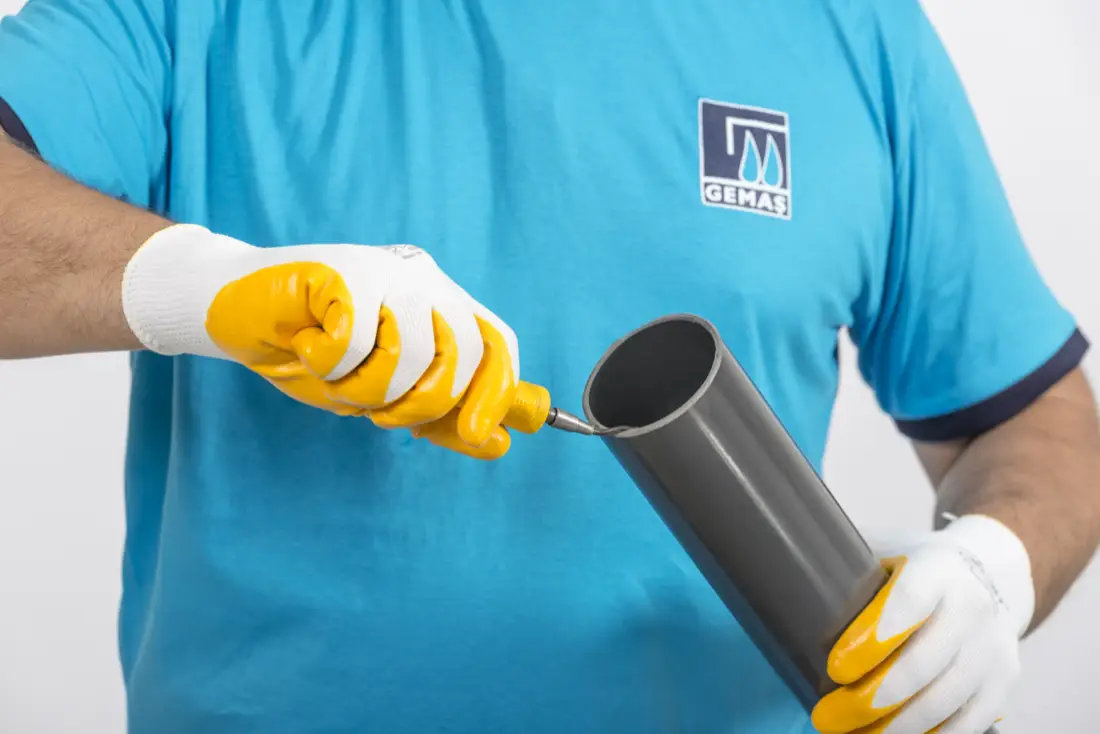
Deburr
Remove the burrs from the cut end.
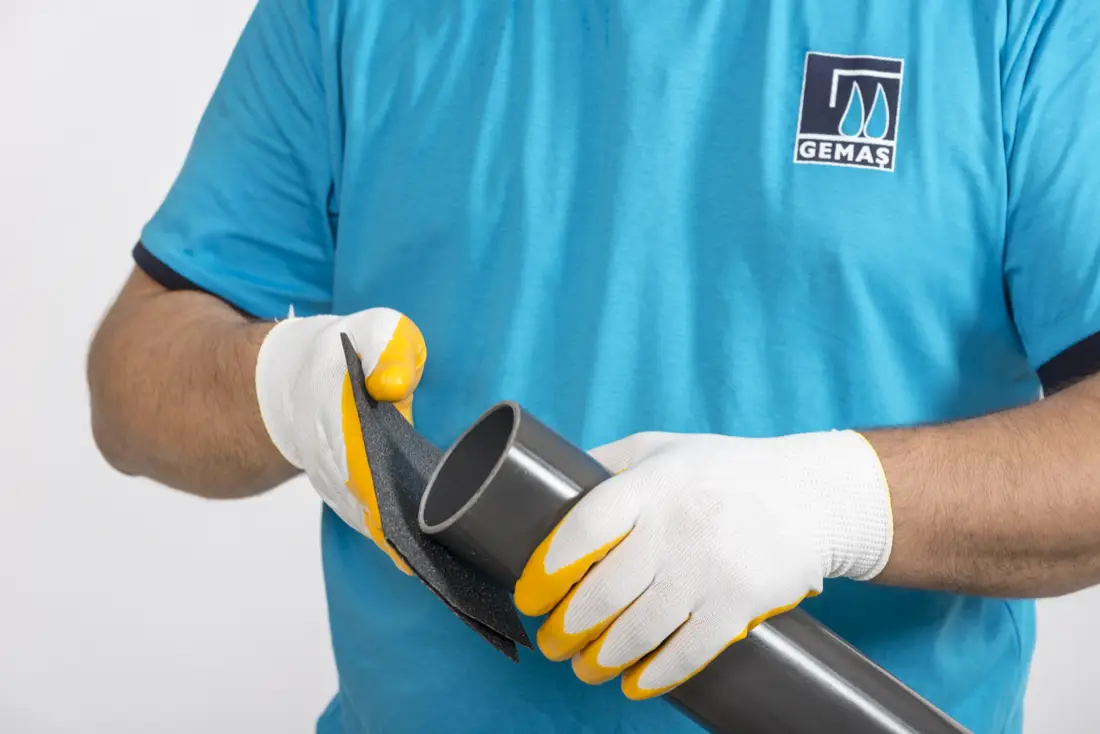
Chamfer
Chamfer the outside edge of the pipe end at about 15°.
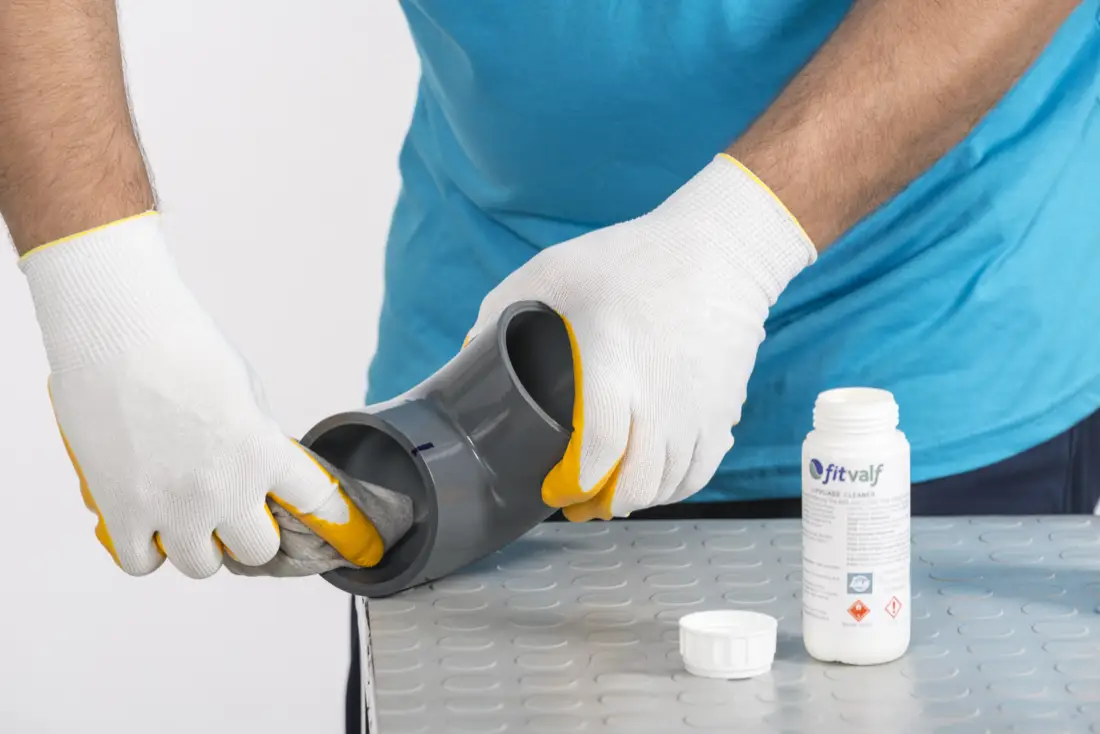
Clean
Apply cleaner to both the fitting socket and the pipe end to soften the contact surfaces.
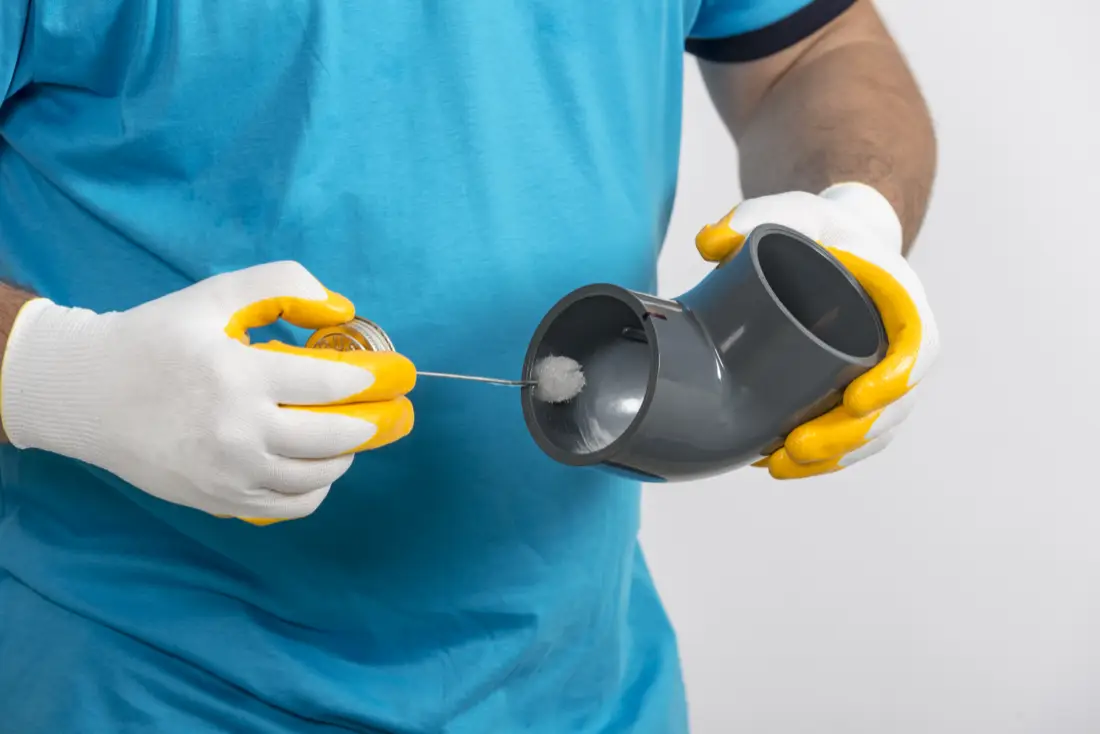
Apply cement
Apply an even layer of solvent cement axially: thicker on the pipe, thinner inside the fitting socket.
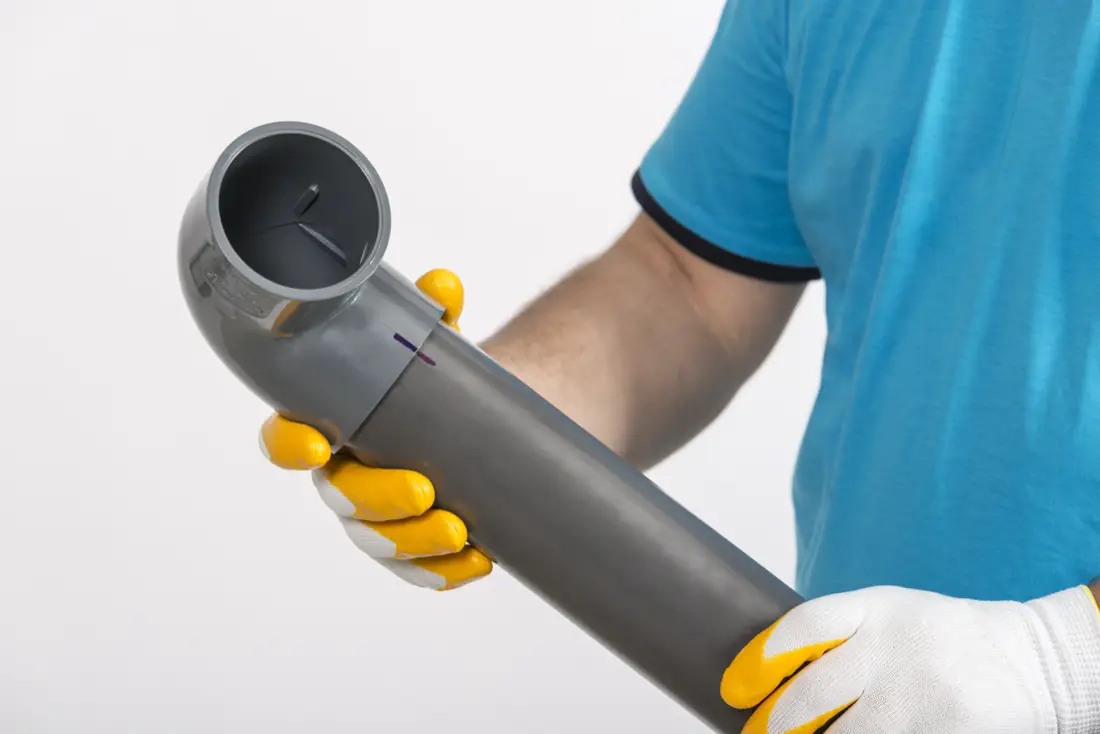
Join and hold
Insert the pipe fully into the fitting without turning it, hold firmly for 15–30 seconds and wipe away excess cement immediately.
Let it cure before you load it.
| 10–15 min | Do not move or disturb the joint. After this, the jointed pipe can be handled carefully. |
|---|---|
| 4 h | Wait before laying lengths of jointed pipe in a trench. |
| 24 h | Wait before pressure testing. For pipe sizes up to 50 mm this can be reduced: allow 1 hour for every 3.5 atmospheres of test pressure. |
Work safely. Every time.
- Use solvent cement and cleaner in a well-ventilated area.
- Keep away from naked flames and do not smoke.
- Close the lids of the containers after every joint.
- Never dilute solvent cement with cleaning fluid.
- Brushes must be clean and dry before use, and cleaned with a suitable cleaning fluid immediately after.
- Always follow the instructions printed on the containers.
Large diameters? Ask our team.
Joining large-diameter pipes requires special attention. Contact our technical service department in case of difficulty.